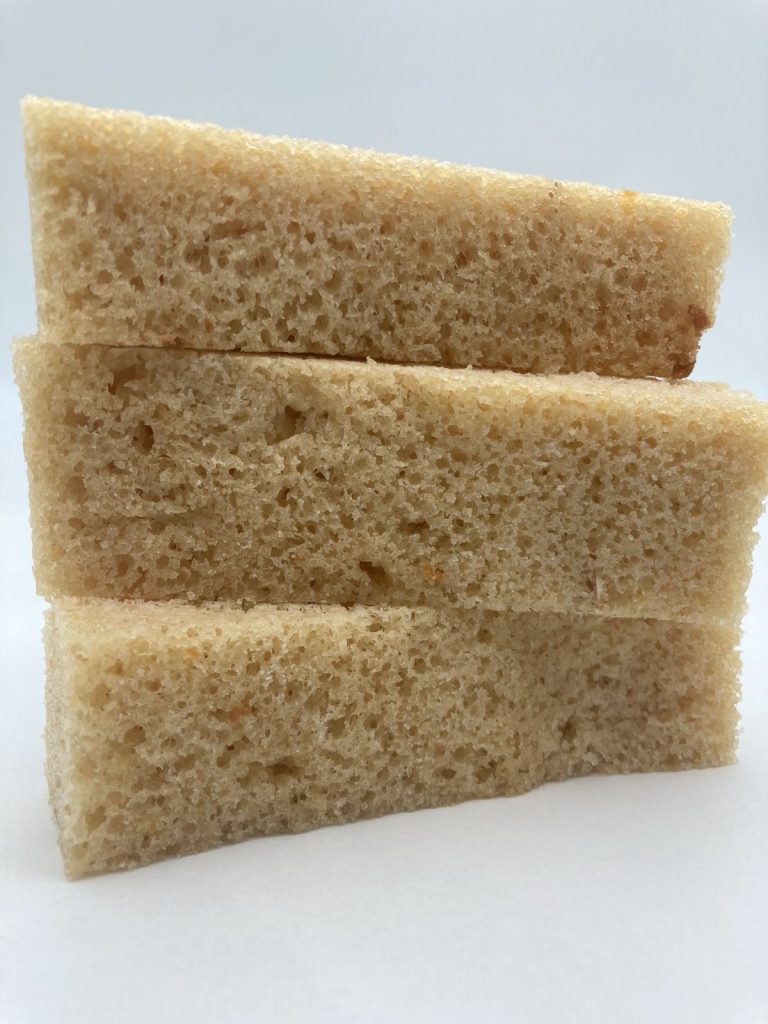
Biscuit
The word "biscuit" comes from the French words "bis," meaning twice, and "cuit," meaning baked. In the past, biscuit sponges were indeed returned to the oven for a short time after baking and cooling to give them a firmer structure.
However, modern ovens bake so efficiently that a second baking stage is no longer necessary. Biscuit sponges differ from the classic Genoise sponge cake in that the egg yolks and egg whites are whipped separately. Additionally, part of the flour in the recipe (or even all of it) can be replaced with finely ground nuts of your choice to give the biscuit sponge a distinctive flavor.
The biscuit sponge batter can be colored entirely or in sections, creating two-tone or three-tone biscuit sponges. Using specialized tools and two different colors of biscuit sponge batter, various patterns and designs can also be created, such as stripes, polka dots, borders, words, phrases, and more, directly on the biscuit sponge.
Additionally, using a suitable stencil, the company’s logo (whether a pastry shop or a hotel) can be incorporated into the biscuit sponge, creating a truly distinctive result. Biscuit sponges are usually baked in special molds, on greased and floured baking trays, or in thin layers on silicone baking mats or rice paper, allowing them to be removed easily without breaking. They can be used in cakes, individual pastries, and other desserts, either between layers of cream or around the sides of cakes as a decorative element.
Biscuit sponge can be stored as follows:
- At room temperature, tightly wrapped in plastic wrap, for 1 day.
- In the refrigerator, tightly wrapped in plastic wrap, for 3–4 days.
- In the freezer, tightly wrapped in plastic wrap, for up to 30 days.